
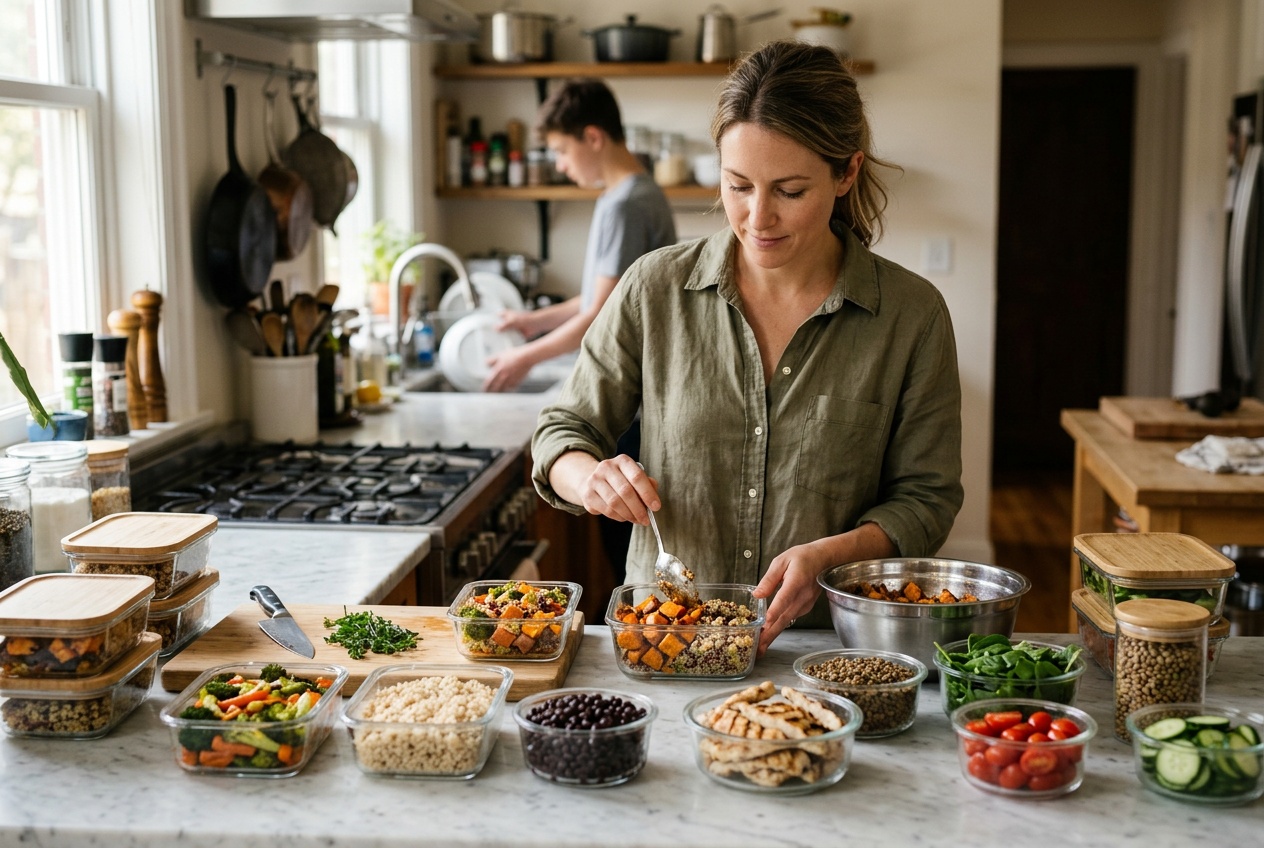
Cooking dinner every night feels overwhelming when you’re already stretched thin. Batch cooking lets you prepare complete meals or meal components in advance, so you spend less time in the kitchen during busy weeknights and always have something ready to eat. Instead of scrambling to figure out what’s for dinner, you can simply reheat a home-cooked meal you already made.
I’ve found that batch cooking isn’t just about spending one long day in the kitchen. You can choose from different approaches that fit your schedule, whether that means cooking everything on Sunday, preparing ingredients throughout the week, or making double portions of meals to repurpose later. The method you pick depends on your time, cooking style, and what works for your family.
In this guide, I’ll walk you through everything you need to know to start batch cooking successfully. You’ll learn how to plan your cooking sessions, which techniques save the most time, what equipment makes the process easier, and how to store meals safely. I’ll also share practical tips to help you avoid common mistakes and make batch cooking a simple habit instead of another chore.
Core Concepts and Benefits
Batch cooking transforms how you approach meal preparation by cooking large quantities of food at once and storing portions for later use. This method cuts down on daily kitchen work while ensuring you have homemade meals ready when you need them.
What Is Batch Cooking?
Batch cooking means preparing multiple servings of food in a single cooking session. Instead of making dinner from scratch every night, I cook larger amounts of food at one time and store portions for the week ahead.
The process works in a few different ways. I might cook complete meals and freeze them in individual containers. Or I can prepare basic ingredients like grilled chicken, cooked rice, or chopped vegetables that I mix and match throughout the week.
This approach turns my kitchen into an efficient workspace. I use the oven, stovetop, and other appliances at the same time to prepare several dishes. One afternoon of focused cooking replaces multiple evenings of meal preparation.
Key Advantages for Home Cooks
Batch cooking supports better eating habits because I always have healthy options available. When nutritious homemade meals sit ready in my refrigerator or freezer, I skip the takeout menu and avoid processed convenience foods.
This method reduces food waste significantly. I buy ingredients in larger quantities and use them completely rather than letting small amounts spoil. Planning what I cook means I purchase only what I need.
Main benefits include:
- Less stress during busy weekdays
- Consistent portion sizes
- Better control over ingredients and nutrition
- Reduced packaging waste from takeout
- More variety in my weekly meals
The cooking process itself becomes simpler. I clean up once instead of multiple times per week. My kitchen stays tidier, and I spend less time deciding what to eat each day.
How Batch Cooking Saves Time and Money
I spend about two to three hours on one cooking session instead of 30-45 minutes every single night. Over a week, this saves me several hours that I use for other activities.
Money savings come from multiple sources. I buy ingredients in bulk at lower prices. Cooking at home costs less than restaurant meals or prepared foods. I waste less food because everything gets used in planned recipes.
Cost comparison:
| Approach | Weekly Cost | Time Spent |
|---|---|---|
| Daily cooking | Higher food costs, some waste | 3-5 hours |
| Takeout/delivery | Highest costs | Minimal cooking time |
| Batch cooking | Lowest costs, minimal waste | 2-3 hours |
Energy efficiency adds to the savings. Running my oven once for multiple dishes uses less electricity than heating it up five separate times. I also reduce trips to the grocery store, saving fuel and time.
Essential Planning Strategies
Good planning turns batch cooking from a chaotic kitchen marathon into a smooth process that saves both time and money. A solid weekly meal prep system paired with smart ingredient choices and organized shopping habits forms the foundation for consistent success.
Creating a Weekly Meal Prep Plan
I start my weekly meal prep by blocking out a specific day and time for cooking. Most people find Sunday afternoons work well, but I’ve seen Thursday evenings succeed just as effectively. The key is consistency.
I map out five to seven meals at once. I use a simple notebook or my phone’s notes app to list what I’ll cook. I assign themes to simplify decisions. For example, Monday might be grain bowls, Tuesday is soup night, and Wednesday features pasta dishes.
I check my calendar before planning. If I have late meetings on Tuesday, I schedule a quick-reheat meal for that night. If Friday is wide open, I might plan something that needs fresh assembly.
I also batch similar tasks together. I roast all vegetables at once, cook multiple proteins using different methods, and prepare several grain varieties in one session. This approach cuts my total cooking time significantly compared to making individual meals throughout the week.
Choosing the Right Ingredients
I select ingredients that hold up well over several days and work across multiple recipes. Proteins like chicken thighs, ground turkey, and firm tofu stay fresh and reheat without becoming rubbery.
For vegetables, I focus on hardy options. Broccoli, carrots, bell peppers, and sweet potatoes maintain their texture better than delicate greens. I add spinach or lettuce fresh when I’m ready to eat.
I buy versatile staples in bulk. A 5-pound bag of rice costs less per serving than small boxes. The same applies to dried beans, quinoa, and oats. These ingredients form the base of countless batch cooking recipes.
I choose seasonal produce when possible. Summer tomatoes taste better and cost less in July than January. Winter squash in October offers better value and flavor than spring imports.
Effective Shopping and Organization
I write my shopping list by store section. All produce items go together, proteins in another group, and pantry staples in a third. This prevents backtracking through the store and saves 15-20 minutes per trip.
I shop once weekly for most items. I pick up fresh herbs or delicate produce mid-week only when needed. Fewer shopping trips mean less temptation to buy unnecessary items that blow my budget.
I organize my refrigerator and freezer before shopping. I move older items to the front and take inventory of what needs using soon. This prevents buying duplicates and reduces waste.
I prep ingredients immediately after shopping. I wash lettuce, chop onions, and portion proteins while everything is already out. The 30 minutes I spend unpacking becomes productive prep time that makes my actual batch cooking session faster and less stressful.
Batch Cooking Techniques and Approaches
Different batch cooking methods help you create homemade meals efficiently, whether you’re cooking full dishes at once, prepping individual ingredients, or planning freezer storage. Each approach offers specific benefits depending on your schedule and meal preferences.
Bulk Meal Preparation
I cook complete meals in large quantities and portion them out for the week ahead. This method works best for dishes like casseroles, soups, and pasta bakes that maintain their quality when stored.
When I prepare bulk meals, I focus on recipes that can be multiplied easily. I double or triple recipes for chili, curry, or lasagna in one cooking session. This saves me significant time compared to cooking individual meals each night.
I divide the finished meals into single servings or family-sized portions right after cooking. Using labeled containers with dates helps me track what needs to be eaten first. Most bulk-prepared meals stay fresh in the refrigerator for 3-4 days.
Best dishes for bulk meal prep:
- Soups and stews
- Casseroles and baked pasta
- Curries and chilis
- Slow-cooker meals
- Rice and grain bowls
Ingredient Prep and Mix-and-Match
I prepare individual ingredients separately instead of complete meals, which gives me flexibility throughout the week. This batch-cooking approach lets me combine prepped items into different meals based on what I want each day.
My typical weekly meal prep includes cooking proteins like shredded chicken or ground beef, preparing grains such as rice or quinoa, and chopping vegetables. I store each ingredient in separate containers and mix them as needed.
This method prevents meal fatigue because I’m not eating the same dish repeatedly. On Monday, I might make chicken tacos with prepped ingredients. On Wednesday, I use the same chicken for a salad. The same base ingredients create multiple homemade meals.
Common prep ingredients:
- Cooked proteins (chicken, beef, beans)
- Cooked grains (rice, quinoa, pasta)
- Chopped vegetables
- Prepared sauces and dressings
Freezer-Friendly Tips
I remove as much air as possible from freezer bags before sealing to prevent freezer burn. Flattening bags also saves space and helps food thaw faster.
I always portion food before freezing rather than freezing one large container. Individual or family-sized portions thaw more quickly and reduce waste. I can pull out exactly what I need for each meal.
When I make sauces or soups for batch-cooking, I reduce the amount of salt and spices slightly. Freezing intensifies these flavors, so I can adjust seasoning after reheating.
Freezer storage guidelines:
| Food Type | Freezer Life | Thawing Method |
|---|---|---|
| Cooked meat | 2-3 months | Refrigerator overnight |
| Soups/stews | 2-3 months | Refrigerator or stovetop |
| Baked goods | 2-3 months | Room temperature |
| Cooked grains | 1-2 months | Microwave or stovetop |
I layer baked items like pancakes, brownies, or scones between sheets of baking paper before freezing. This prevents them from sticking together.
Double-Up and Repurpose Methods
I cook extra portions during regular meal preparation and transform leftovers into new dishes. When I roast a whole chicken for dinner, I use the leftover meat for sandwiches, salads, or soup later in the week.
This batch cooking technique requires minimal extra effort since I’m already cooking. I simply increase quantities and plan how to repurpose ingredients. A large batch of cooked ground beef becomes taco filling one night and pasta sauce another night.
I also save cooking liquids and bones for future use. Chicken bones become stock, which I freeze in portions for soups and sauces. This approach reduces waste while building my meal prep inventory.
Must-Have Equipment and Kitchen Tools
The right equipment makes batch cooking faster and more efficient. Quality pots, reliable storage containers, and a simple labeling system protect your food and help you stay organized.
Pots, Pans, and Sheet Trays
I use half-sheet pans for almost everything. These 18×13 inch trays fit standard ovens and handle multiple batches of roasted vegetables or proteins at once. Commercial-grade aluminum pans don’t warp at high heat, which prevents uneven cooking and oil pooling.
A large Dutch oven between 5 and 7 quarts works for soups, stews, and braised meats. Cast iron or enameled cast iron holds heat evenly and goes from stovetop to oven without issue.
I keep at least two half-sheet pans and one quarter-sheet pan (13×9 inches) in rotation during batch cooking sessions. The smaller pan handles prep work and cooling tasks. A large stockpot with an 8-12 quart capacity covers pasta, grains, and big-batch soups.
Choosing Glass Containers and Storage Solutions
Glass containers with airtight lids store cooked components in the fridge for up to five days. I prefer containers that stack without wasting space and have clear sides so I can see what’s inside.
Look for containers made from tempered glass that can go from freezer to microwave safely. Square or rectangular shapes use refrigerator space better than round ones.
A basic set should include containers in three sizes: small (2 cups), medium (4 cups), and large (8 cups). This range handles single portions through family-size batches. The lids must seal completely to prevent leaks and keep food fresh.
Vacuum-sealed bags work better than containers for freezer storage beyond one week. They take up less space and prevent freezer burn.
Labeling and Organization Essentials
Every container needs a label with the contents and date. I use removable labels or painter’s tape with permanent marker because they come off easily when washing.
Write the actual date you cooked the food, not when you plan to eat it. Most cooked foods stay safe in the fridge for 3-5 days. Without dates, you’re guessing whether something is still good.
A simple system works best. I label each container before it goes in the fridge or freezer. Keep a permanent marker in the kitchen drawer where you store labels so everything stays in one place.
Popular Recipes and Meal Ideas
Batch cooking works best with recipes that reheat well and maintain their flavor throughout the week. The most successful dishes include slow-cooked proteins, hearty soups, and make-ahead breakfast options that save time during busy mornings.
Classic Batch Cooking Recipes
I find that traditional comfort foods make the best batch cooking recipes because they actually taste better after a day or two. Beef stew is a perfect example. The flavors blend together as it sits in the fridge, and you can freeze portions for up to three months.
Big-batch bolognese is another winner. I cook a large pot on Sunday and use it for spaghetti, lasagna, or even stuffed peppers during the week. Lentil soup freezes beautifully and costs very little to make. One pot can give you six to eight servings.
Top Classic Recipes:
- Chicken tikka masala
- Beef bourguignon
- Sausage ragu
- Five-bean chilli
- Meatball stew
These dishes all share one important quality: they hold up well in the fridge for 3-4 days or in the freezer for 2-3 months.
Proteins for Every Occasion
Shredded chicken is the most versatile protein I batch cook. I roast or slow-cook several pounds at once, then use it in tacos, salads, pasta, and soups. It stays moist when stored properly and takes minutes to reheat.
Lamb curry and pulled chicken with black beans both freeze exceptionally well. I portion them into single-serving containers before freezing. This makes it easy to grab exactly what I need.
Ground meat works well for multiple recipes. I brown several pounds, then divide it for different uses:
- Taco meat with spices
- Italian meatballs
- Asian-style stir-fry base
Pork and beef can be prepared the same way. The key is cooking the protein fully before storing it.
Vegetarian and Vegan Options
Plant-based batch cooking saves money and provides plenty of nutrients. Roasted vegetables last 4-5 days in the fridge. I roast sheet pans of peppers, squash, zucchini, and onions all at once.
Butternut squash curry with cashews makes an excellent freezer meal. The coconut milk base stays creamy after thawing. Vegetarian bolognese made with plant-based mince costs less than meat versions and provides similar protein.
Breakfast burritos filled with beans, frozen veg, and scrambled eggs can be wrapped individually and frozen. I make 20-30 at a time. They microwave in two minutes for quick homemade meals.
Easy Vegetarian Batch Options:
- Ratatouille (freezes for 3 months)
- Lentil and butternut squash soup
- Aubergine parmigiana lasagne
- Bean and veggie chili
These recipes prove that batch cooking works just as well without meat.
Tips to Maximize Results and Avoid Pitfalls
Smart batch cooking requires attention to detail in three key areas: reducing waste, using time-saving ingredients, and making meals work for your needs. These strategies help you get the most from your meal prep sessions.
Preventing Food Waste
I always portion my batch-cooked meals before freezing them. This prevents me from thawing more food than I need and throwing away leftovers.
Getting rid of excess air from freezer bags stops freezer burn from ruining my hard work. I flatten the bags before sealing and press out all the air I can. For containers, I place a sheet of baking paper directly on the food’s surface before adding the lid.
I label everything with the date and contents. Without labels, I end up with mystery containers that get tossed after sitting too long. A simple piece of tape and a marker saves me money and reduces waste.
When I’m cooking soups or stews with spices, I go easy on salt and chili peppers. Freezing makes these flavors stronger, so I add more after reheating if needed.
Incorporating Frozen Veg and Leftovers
Frozen veg cuts my prep time significantly during batch-cooking sessions. I keep bags of frozen carrots, peas, and mixed vegetables on hand because they’re already washed and chopped.
I use frozen vegetables in curries, pasta bakes, and stir-fries without thawing them first. They cook quickly and retain their nutrients just as well as fresh options. This saves me from chopping for hours when I’m making large batches.
Leftover proteins work perfectly in batch cooking. I shred extra chicken after roasting and freeze it in portions. This shredded meat goes into sandwiches, tacos, salads, and noodle dishes throughout the week. I also save vegetable scraps and bones in the freezer to make stock later.
Adapting for Different Diets and Lifestyles
I make base recipes that I can customize for different eating styles. A plain batch of cooked rice, beans, or grains becomes the foundation for multiple meals.
For mixed households, I keep sauces and proteins separate from grains and vegetables. This lets me combine ingredients differently for family members with dietary restrictions. Someone avoiding dairy can skip the cheese sauce I add to my portion of pasta bake.
I adjust portion sizes based on who’s eating. Single servings work when only I’m home for lunch. Larger containers make sense for family dinners. Teenagers need different amounts than young children, so I freeze meals in various sizes.
When meal prepping for the week, I cook different protein options and vegetables separately. I can then mix and match them to prevent eating the same thing every day while still benefiting from batch cooking.