
Getting a pet can be exciting for kids, but it also means learning how to care for another living creature. Different ages bring different abilities, and matching pet tasks to your child’s development helps them succeed.
Teaching pet responsibility in stages ensures your child builds skills safely while forming a caring bond with animals. Starting with simple actions like gentle touching and moving up to tasks like preparing meals gives kids confidence over time.
The right approach depends on what your child can handle physically and mentally at each stage. I’ll walk you through age-appropriate tasks from toddlerhood through the preteen years so you can guide your child toward becoming a capable pet owner.
1) Age 2–3: supervised play with plush pet toys to model gentle touch
I recommend starting with stuffed animals at this age. Real pets are too unpredictable for toddlers who are still learning body control.
I use plush toys to show children how to pet softly. I demonstrate stroking the toy’s fur gently and speaking in a calm voice. Then I let the child try while I watch closely.
Toddlers often grab, poke, or hug too tight at first. This is normal. I gently correct them by guiding their hand to show softer movements.
I also teach basic pet words during play. Words like “gentle,” “soft,” and “careful” help kids understand what I expect.
These play sessions should be short. I keep them to 5-10 minutes since toddlers have limited attention spans.
I make it a game by praising good touching. When the child pets gently, I say “Good job being soft with the puppy!” This positive feedback helps them learn faster.
The goal is building habits. By practicing with toys first, kids learn the right way to touch before they ever meet a real animal.
2) Age 3–4: responsible feeding with pre-measured portions and adult guidance
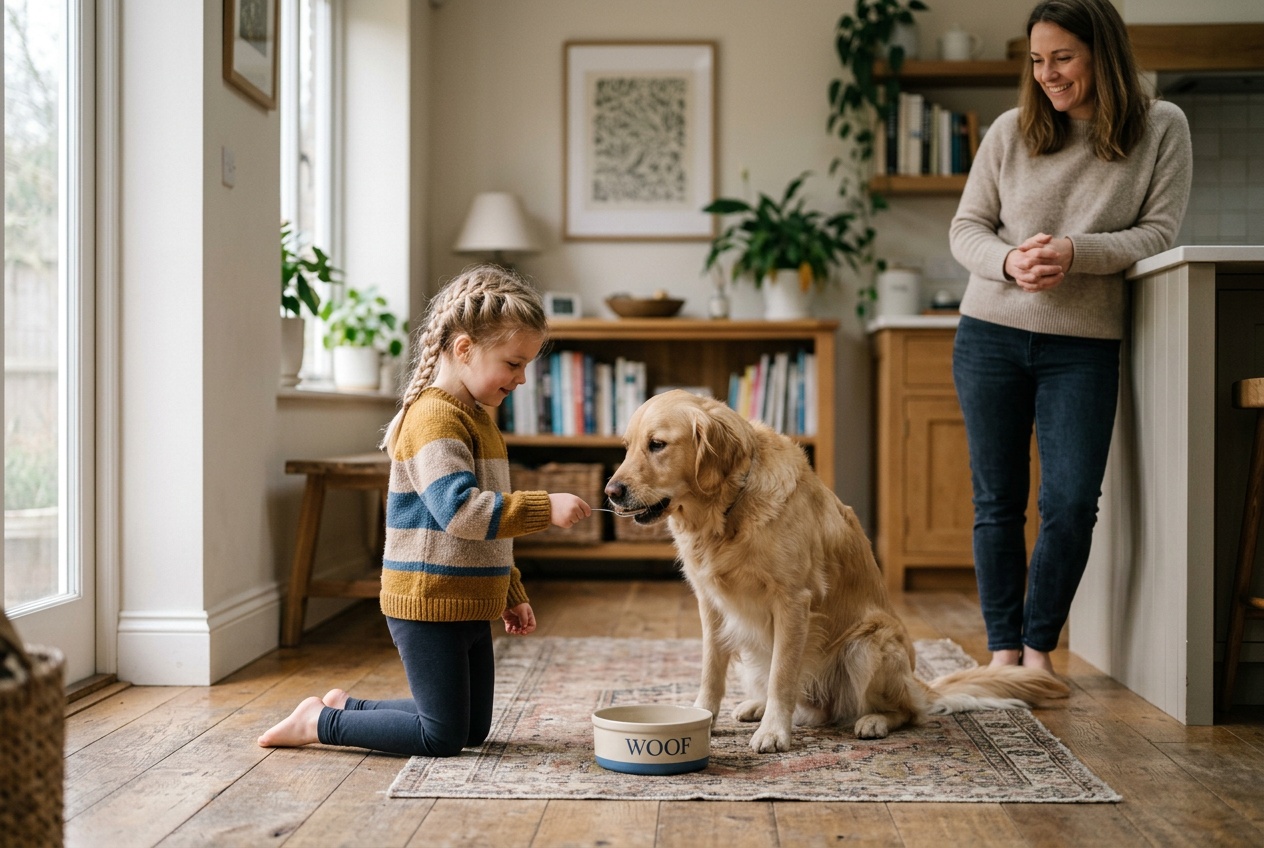
At this age, kids can start helping with pet feeding tasks. I recommend using pre-measured portions to make the job easier and safer.
Before each feeding time, I measure out the right amount of food into a small container. This keeps the child from overfeeding the pet and makes the task simple to complete.
The child can then pour the pre-measured food into the pet’s bowl. I always stay close by to watch and help if needed.
This teaches kids that pets need food at certain times each day. They start to understand that taking care of animals means following a routine.
I make sure to explain why we feed the pet the same amount each time. Kids at this age can learn that too much or too little food isn’t good for animals.
The key is keeping things simple and staying involved. I guide my child through each step until they feel comfortable with the task.
This early practice builds good habits. It also helps young children feel proud of helping care for the family pet.
3) Age 4–5: daily water bowl checks and simple cleanup tasks
At this age, I find that kids can handle basic daily tasks with a pet. Checking the water bowl is a perfect first job. I teach them to look at the bowl each morning and evening to make sure it has enough clean water.
Kids this age can also help with simple cleanup. They can pick up pet toys and put them back in a basket. I show them how to throw away small pieces of trash near the pet’s area.
Another good task is wiping up small spills around the water bowl. I give them a paper towel and let them clean the floor when water splashes out. This helps them learn that pets need care every single day.
I always supervise these tasks at first. Kids need to learn the right way to do each job. After a few weeks of watching and helping, most children can do these tasks on their own.
I make sure to praise them when they remember without being asked. This builds good habits early on.
4) Age 5–6: brushing sessions with a soft brush while adult supervises
At this age, I can teach my child to brush our pet gently. A soft brush works best for their small hands.
I start by showing them how to hold the brush. Then I guide their hand to brush in the direction the fur grows. My child learns to be gentle and calm around our pet.
I always stay close during brushing time. This keeps both my child and pet safe. I watch to make sure the brushing doesn’t hurt the animal.
Most kids this age can brush for about five minutes. I praise them when they’re doing it right. If our pet seems uncomfortable, I step in to help.
Brushing teaches my child that pets need regular care. It also helps them bond with our animal. This is a good first step toward bigger responsibilities later.
I let my child brush our pet two or three times a week. This makes it part of their routine without overwhelming them.
5) Age 6–7: learning to hold small pets safely under supervision
At this age, I teach children how to hold small pets like guinea pigs, rabbits, and hamsters. Kids have better hand control now, but they still need an adult watching closely.
I start by showing them how to support a pet’s whole body with both hands. One hand goes under the chest, and the other supports the back legs. This keeps the animal from feeling scared or getting hurt.
I make sure kids sit down on the floor first. If they drop the pet by accident, it won’t fall as far. I also teach them to stay calm and move slowly since quick movements can frighten small animals.
Practice sessions should be short at first. I limit holding time to just a few minutes until the child gets comfortable. I remind them that pets aren’t toys and need gentle care.
I watch for signs that a child isn’t ready yet. Some kids squeeze too hard or want to carry pets around too much. When this happens, I give them more time to practice with stuffed animals instead.
6) Age 7–8: walking a dog with a short leash and an adult present
At this age, I can start teaching my child to walk the dog. A short leash works best because it gives them better control.
I always go along on these walks. My presence helps keep both my child and the dog safe. I can step in if the dog pulls too hard or if my child needs help.
I teach my child how to hold the leash properly. They need to keep a firm grip and stay alert to what the dog is doing.
Walking a dog teaches important skills. My child learns to pay attention to the pet’s needs and behavior. They also practice following safety rules.
I start with short walks around the block. As my child gets more comfortable, we can go a bit farther. I watch how they handle the leash and give tips when needed.
This task builds confidence. My child feels proud to take care of the dog in this new way. It also helps them understand that pets need exercise every day.
7) Age 8–9: assisting with litter box scooping or cage spot-cleaning
At this age, I can teach my child to handle basic pet waste cleanup tasks. Kids between 8 and 9 have better coordination and can follow multi-step instructions.
I start by showing them how to scoop a litter box properly. This includes using the scoop correctly, disposing of waste in the right container, and washing their hands afterward.
For small pets like hamsters or guinea pigs, I guide them through spot-cleaning cages. They can remove soiled bedding from one corner while the pet stays safe in another area.
I always supervise these tasks at first. My child needs to learn proper hygiene practices to stay healthy around pet waste.
I make sure they understand this is a regular chore, not a one-time job. Setting a schedule helps them remember when cleaning needs to happen.
Some kids feel grossed out at first. I acknowledge their feelings but explain that this is part of caring for a living creature. With practice, most children get comfortable with these tasks quickly.
8) Age 9–10: tracking pet appointments and helping schedule vet visits
At this age, I can give kids more responsibility with healthcare tasks. They can learn to keep track of when the pet needs to see the vet.
I start by showing them how to use a calendar or planner. They can write down appointment dates and set reminders on a phone or tablet.
Kids this age can also help me call the vet’s office. I let them practice making appointments while I listen. This teaches them phone skills and how to communicate clearly.
I encourage them to keep a simple health record for the pet. They can note down the date of each visit and what happened. This helps them see patterns in the pet’s care.
They can remind me when it’s time for yearly checkups or vaccinations. I make sure they understand why regular vet visits matter for keeping pets healthy.
This responsibility teaches planning and organization skills. It also shows kids that pet care involves more than just feeding and playing.
9) Age 10–11: administering oral medications with supervision
At this age, I can teach my child to give oral medications to our pet. This is a big step in pet care responsibility.
I start by showing them how to read the medication label. We review the correct dosage and timing together. I explain why following the vet’s instructions exactly is important for our pet’s health.
I demonstrate the proper technique first. For pills, I show them how to gently open the pet’s mouth and place the medication far back on the tongue. For liquid medications, I teach them to use a syringe or dropper carefully.
My child practices while I watch closely. I help them stay calm because pets can sense nervousness. We work together to make sure the pet swallows the medication completely.
I always supervise during this task. Medicine errors can harm our pet, so my presence keeps everyone safe. This responsibility helps my child understand that pet care includes medical needs, not just feeding and playing.
10) Age 11–12: independently preparing simple pet meals from provided portions
At this age, I can trust kids to prepare their pet’s meals without constant supervision. They have the skills to measure food correctly and understand why portion control matters for their pet’s health.
I recommend starting by showing them how to read feeding instructions on pet food packages. They should know how much food their pet needs based on weight and age. Once they understand this, they can handle the daily feeding routine on their own.
Kids at this age can also mix dry and wet food together if needed. They can add water to kibble or combine different types of food following the portions I’ve already determined.
I make sure to keep all pet food and supplies in easy-to-reach places. This helps them stay independent without needing to ask for help finding things.
They should also learn to check food freshness and store opened pet food properly. I teach them to refrigerate wet food after opening and keep dry food in sealed containers.
The key is that I still provide the portions and guidelines. They follow my instructions but do the actual work themselves.