Get our FREE Newsletter

Each issue is filled with easy recipes, parenting solutions coupons and more.

Sign me up!

Does your family like to
try new things?

Be an official tester of products, toys, books and recipes.

Sign me up!

All posts under ‘Guest Blogger’

Guest Post: Photography Q & A with Dani Girl

Hello again! After a very fun week of guest blogging here at Canadian Family, today is my last post. (Ed note: :( ) Although I was quite prolific (perhaps the Family Jewels editors might say even a bit too verbose!) (Ed note: Nah!) in the past four posts, I ran into a dead end when I sat down to write this post. So much left to say, and I couldn’t figure out how to organize it into a coherent post. Then I realized that people had left me some excellent questions on my own blog when I started talking about this guest-blogging stint, and some of those questions I even knew the answer to!

So, here are some questions on photography from readers of Postcards from the Mothership and my best answer to those questions.

Joy asked: Is it necessary to have an expensive camera, or do cheaper digital cameras take good pictures, too?

I was going to be cheeky and say something like “cameras don’t take pictures, people take pictures” but this is a very good question that deserves a longer answer. Yes, it’s true, a fancy camera will give you more options and more creative control when taking pictures. You can adjust for ISO (the amount of light that hits the sensor) and finesse your aperture and shutter speed, and even change your lenses for various situations.

But you know what? Excellent cameras take crappy pictures, too. And crappy cameras take excellent pictures. I’m so infatuated with the iPhone pictures that I’ve been seeing online that I want one just for that!

If you are serious about learning photography then yes, investing in something like a dSLR will probably help you learn on a steeper curve than a $100 point-and-shoot. BUT, if you don’t bother to learn the fundamentals and how to work the controls of the dSLR, you’re probably better off with the $100 camera.

]

Taken with my point-and-shoot Fuji Finepix.

Melissa asked: Should I compose my picture when I’m shooting or is cropping after the fact a better method?

You should always strive to make the best picture you can with your camera. (She said in the voice of every photography teacher she has ever had.) Ahem. Having said that, post-processing software is your friend. You should always try to make the absolute best image you can before you press the shutter, but I see the use of processing software like Lightroom, Elements, Picasa or Gimp (to name but a few) as just another tool in helping you realize your vision for that image. Some pictures are perfect straight out of the camera, and some pictures need a little help.

You don’t have to shell out $600 for Photoshop to get a good photo-editing program, by the way. I picked up a copy of Photoshop Elements for $88 at Costco last month. If you are a teacher, or have a student in your house, Adobe offers some excellent educational discounts. Picasa and Gimp are both highly rated and completely free!

Fun with Photoshop!

Shannon asked: How about tips on organizing the tons of photos you take and how to keep up with them? In this digital age, you take so many photos and it can be overwhelming to narrow them down.

This is something I struggle with. Now that I’m using Lightroom (I’m a recent convert, but positively evangelical about how it has changed my photo life!) I’ve started to do smart things like make back-ups of my photos and use keywords to organize them. You simply have to find an organizational method that works for you and then stick with it.

This is what works for me: Each day I upload the pictures from my memory card to the camera and save everything in a chronological file by month and day with the image number (DSC2515) as the title. I edit the ones I want to keep and save those in a different spot. I put them in folders with titles like “Nova Scotia vacation” and give the images a meaningful title (“Lucas meets the ocean”), as well as uploading them to Flickr.

Did you see that drive-by mention to backing up your photos? I keep my favourite images in at least three different places. If you remember ONE thing I’ve talked about, remember to think about the light. But if you’ve got room in your busy brain for TWO things? Please please please make regular back-ups of your pictures. You’ll cry for days if you lose them. External hard drives are dirt cheap right now—you can get a terabyte for $200. Even I can’t fill one of those puppies. (Well, not yet!)

Dawn said: I would LOVE some tips on avoiding red eye…my camera has a red eye setting on it, but it never seems to work!

When I first read this question, I thought, “Hmmm, maybe that’s something that a dSLR does better than a point-and-shoot, because I almost never get red-eye.” And then I realized that the reason I almost never get red-eye is because I almost never use the flash! So the answer is: Don’t use the flash! As I suggested in my first post, go for natural light whenever possible.

Having said that, yes, I understand, sometimes you really need that flash. If you must, take a look at some of the image-editing programs I mentioned above. All of them have one-click red-eye fix.

Carrie said: I wish I could figure out how to capture those action shots. I suspect it has to do with my camera and a need to buy something with some funky features but any tips would be appreciated!

Capturing action shots are about freezing the moment. To freeze the movement, your camera has to work fast. To get your camera to work fast, you need to feed it lots of light. (Have I beaten the “see the light” horse to death yet?) As much as possible, adapt your expectations: you won’t get great light after dinner on a stormy day in November, but you will get great light at mid-day at the park. Or you can boost the light in the room if you’re indoor; throw on all the lights and open the curtains.

This is one of those times when a more expensive camera will help you out. I have to admit, the number one reason I moved from point-and-shoot to a dSLR (I’ve had my Nikon D40 for about three years now) is the fact that there is virtually no time delay on the shutter release. If you’re looking for a new camera, make sure you’re getting one with the minimum possible shutter delay, it’s far more important than mega-pixels or just about anything else the camera store will try to sell you on.

If I could impart one last piece of advice to you, it’s this: have fun with your camera. Don’t be afraid to experiment. Try wacky angles and crazy compositions. Take your camera everywhere, and don’t be afraid to whip it out in the grocery store when the light on the bananas strikes your fancy. (Oh yes, I did.)

Thanks a million to Megan and the Canadian Family peeps for letting me come out here and play with y’all. (Ed Note: Our pleasure!) And if you have any questions about any of what I’ve written about this week, don’t hesitate to ask in the comment box or to find me online.

—Dani Girl, Postcards from the Mothership

  • comment on this postComment
  • RSS Feed IconGet The RSS

Guest Post: If You Value Your Sanity, Never Photograph Kids or Pets

Hi again! I hope you’ve been enjoying the guest blog posts I’ve been writing for Canadian Family. I’ve truly had a fun time writing them! So far in this series, we’ve talked about light, about composition, and about a few technical elements that will enhance your photography. Today we’ll talk about how to wrangle the talent: getting your kids be extra adorable and extra in-focus when you pull out the camera.

And about the title for today’s post? I’m only kidding. Sort of. You can successfully photograph both kids AND pets, but it helps if you approach it with an open mind and a sense of humour.

Formals versus Candids

I’m not a fan of posed portraits. In fact, I forget to take them. I love candid shots because I think that’s where you see a person’s true personality. Well, that’s not quite true. In fact, you can see a little *too* much of my boys’ personality in this attempt at a more formal posed shot, taken last summer at Niagara Falls.

And this is the best of more than 50 I took that day, trying to make a posed shot work. With the sun behind me, they’re all squinting and the boys are simply not cooperating, and I was on the verge of losing my temper over it. Definitely not one of my finer photographic moments.

On the other hand, this next one is one of my favourite pictures ever of my boys. The little one already has his hat half off, and the oldest one’s eyes are closed, and the whole thing is a microsecond away from chaos, but I went with the flow and caught the moment, and got a picture that’s a keeper.

So, my advice is this:  skip the formal portraits and just bring your camera with you everywhere. The best photos are the ones that capture the moments you want to remember, not the moments a microsecond after you hissed, “If you don’t get your finger out of your sister’s ear and smile nicely for the camera you’re grounded until you graduate.”

Oh, and while we’re talking about portraits versus candids, don’t think that your kids have to be smiling in every picture. Catching those moments of deep thought, of frustration, and even of tears, are an authentic record of what life is really like.

(That’s my niece with the big blue eyes. I love love love the “who, me?” look as her cousin glares at her. Perfectly captures their relationship this year!)

Bring out the props

If you want to keep your kids engaged while you’re busy snapping pictures and you want a great way to capture their personality, give them some props. This works really well with babies—give them a bag or box with a favourite toy, and capture the expression of delight when they discover an old friend inside. Be sure to capture older kids practicing piano lessons, or passing a soccer ball, or whatever it is they love to do. Once they’re engaged with something, they’ll forget you’re sticking a lens into their personal space again!

I have dozens, maybe hundreds, of shots of my boys drawing and painting, because a couple of pieces of paper and a box of crayons will keep the lot of them engaged for hours!

And speaking of artists—running out of space for the endless stream of crafts that come home each week? Take a picture of a few each week and then toss them into the recycle box guilt-free. They’re a lot easier to store on your hard drive than they are in the drawer, and they’ll keep better that way, too.

Fingers and toes and parts, oh my

I don’t really have a theme to my body of work as a photographer, but one thing I consistently love to capture are wee fingers and toes at work. (I suppose that ties in with my obsessive photographing of my kids while they’re drawing, now that I think of it.)

Don’t think you always have to get the whole kid in each picture. Zoom waaaaaay in and get just those toes, or a beautiful blue eye with long eyelashes, or (I covet) a blond ringlet in the sun. Sometimes, just a piece of something can be evocative of the whole. This works particularly well when the face is scowling at you – ears and elbows don’t scowl!

Look into my camera

So you have three dozen shots of the back of their heads as they run down the path in front of you, and two dozen shots of them on the swing set, and a dozen more of them whizzing by on their bikes, but you really, really just want one of them smiling for the camera?

Here’s a few ideas. My two-year-old is now so used to me pointing the camera in his face that he’s oblivious to it. I have a hard time capturing him actually looking at me. One trick I’ve used is asking him to look into the camera lens to see if he can see mommy’s eyeball. Doesn’t work every time, but it’s done the trick more than once!

If you’re taking a picture of a big gaggle of kids (maybe a birthday party, or a family gathering) try asking them to all close their eyes and keep them closed until you say “Go!” At least you won’t end up with half the group blinking at the wrong time. Or for a really fun shot, ask them all to jump on the count of three. Even if you don’t get a good shot of them all jumping, chances are they’ll be laughing and smiling in the minute or so after they all jump.

This is my no-fail trick for getting a natural smile out of my boys. (Your mileage may vary, and I found it works less well with girls, but I’m sure you can come up with an equivalent.) When I’m just about to press the shutter and they’re making that godawful grimace that they think passes for a smile, I tell the boys “No matter what you do, don’t think about… boogers!” They burst out laughing, I snap the shutter, and viola: perfect capture. I’ve swapped out “boogers” for “purple ant-eaters” and “giant ice-cream-eating elephants” and yes, I am not ashamed to admit it, “stinky farts.” If you want the genuine smile, sometimes ya gotta go with what works.

Don’t forget, I’ve still got a few Canadian Family magazine subscriptions to give away on my blog, so drop by before the end of the week if you’d like to enter the giveaway.

I’ve got one post left in my guest blogging sojourn here at Canadian Family. Any thoughts on what you’d like me to talk about?

—Dani Girl, Postcards from the Mothership

  • comment on this postComment
  • RSS Feed IconGet The RSS

Guest Post: The 10 Elements of Photo Composition

I’m guest blogging here at Canadian Family with some tips, tricks and techniques on how to improve your family photography. So far we’ve talked about light and about some basic elements of composition.

Today, I want to talk about 10 key concepts of composition and how you can use them to improve your everyday photography. Not every photograph will contain every element, but these are concepts that you should learn to look for and incorporate them whenever you can.

1 Line

Lines lead your eye around a photograph. They can draw you in to an image, but if you are not careful they can lead the eye right back out again. Lines are a powerful tool in an image. See how the lines of the surf lead right to the figure, and how the line of the horizon also points to him?

Horizontal lines are usually restful and occasionally static; vertical lines are more dynamic and diagonal lines even moreso. Curvy lines are very pleasing to the eye.

2 Shape

A closed line becomes a shape. Shapes have strong symbolic meaning. Think of circles, squares, stars. A triangle is very pleasing in photography, and things in odd-numbered sets seem to be more dynamic than things in even-numbered sets.

3 Colour

I could write a whole post on colour alone, and of course, entire textbooks have been devoted to colour theory. Colour has temperature (blues and greens are cool, oranges and reds are warm) and intensity and hue. Colours opposite each other on the colour wheel are complimentary and “pop” when beside each other. Red seems to come forward in a picture while blue recedes.

The yellow of the child’s t-shirt in the photo above really pops against all that blue, and the difference draws your eye to him immediately. When you’re looking through the viewfinder, consider how the colour works in the scene – is a red item in the background drawing attention away from your subject? Does the green couch clash with your baby’s orange jumper? Would a yellow slicker make your toddler stand out against an emerald green sea of grass on a rainy day?  And of course, the absence of colour speaks for itself.  A black and white image, which has been completely desaturated of colour, can be just as compelling as a full-colour one.

4 Space

Space is quantified as positive and negative. Positive space is the space occupied by the people and objects in your images and negative space is the space around them, like the sky. If your image is too crowded, it will be unpleasant for the viewer. Space is closely related to balance, which we will discuss below.

5 Texture

Texture is what gives your photo a feeling of depth and dimension. Side lighting helps illustrate texture with gentle shadows. When you capture texture in an image, the viewer can imagine if something is soft or hard, bumpy or smooth. Think of the way soft light can make a baby’s skin glow – you’ve captured the texture.

6 Pattern and repetition

The eye is drawn to things that stand out, so if you have a pattern of five squares and one star, your eye is drawn immediately to the star. You can use this in photos by establishing and then breaking a pattern – four empty swings plus one with your child in it, or a plate full of apple slices with one timbit, or five beer bottles and one baby bottle lined up on the countertop. (Not that I would know what that looks like. Ahem.)

You don’t have to break a pattern for it to be effective. This has always been one of my favourite pictures. Just some shoes in three sizes – but it captures a moment in time for me. The shoes offer their own pattern, and the deck rails establish their own complimentary rhythm to the picture.

7 Balance

Balance is an easy concept to understand but a hard one to explain. Just as your subjects need a certain amount of negative space around them so they don’t feel crowded, you must have a certain amount of balance in your pictures. Larger and closer subjects seem to have more “weight” but can be balanced by smaller and more distant items.

8 Symmetry

Symmetry is balance in the extreme. Some symmetrical pictures can be very pleasing; imagine a landscape with a snow-topped mountain reflected in a mirror-still lake. On the other hand, symmetry can also be static and undynamic.  Breaking the symmetry of an image can lead to very interesting results.

9 Framing

No, I’m not talking about printing your fave shots and putting them up on the wall. Look for natural opportunities to frame your subject within your photo. I am personally addicted to frames within frames – it’s something I see everywhere and often try to capture. Doorframes, windows, mirrors – those are some of the more obvious choices for framing. But also consider shooting through two stacks of blocks at a builder at work, or shooting through the monkey bars on the playground, or between two tree branches.

10 Motion

Good news! That blurry picture of your baby crawling out of your perfectly-composed image? That’s a technique! With a quick shutter speed (usually the “sports” setting on a point-and-shoot) you can freeze action, or you can choose a longer shutter speed to intentionally show a subject in motion. Panning is a technique where you follow a moving subject with your shutter open – in theory, your subject will remain crisp while the background is blurred behind it. This is fun to try later in the evening near twilight when the kids are playing in the driveway but the light is low. Try to follow them smoothly as they ride by on their bikes – it’s a neat effect when you can make it work!

If you are interested in a more detailed explanation of some of these concepts, I recommend an article called Composition & the Elements of Visual Design.

Tomorrow, I’ve got some more practical tips for you. We’ll talk about candid versus posed shots, ideas for props and locations, and how to avoid the “smile for the camera” grimace that looks like your child just ate a spam-coated lemon drop.

And don’t forget to drop by my blog to for your chance to win one of five gift subscriptions to Canadian Family!

—Dani Girl, Postcards from the Mothership

  • comment on this postComment
  • RSS Feed IconGet The RSS

Guest Post: Composition in Photography

In yesterday’s guest post, we talked about learning to see the light and how to use it in photography. Today’s topic is all about composition: deciding what to include in a picture, what to keep out, and where to put it.

When you start taking pictures, your first instinct is to snap your finger down on the shutter button as soon as you get your subject anywhere within the frame. No doubt, that does the trick; you’ll have a photographic record of whatever it was that caught your eye.

However, if you take a couple of seconds to think about the composition of your photograph, and another heartbeat or two to take a really good look through the viewfinder and be selective before you push that shutter button, you take the big leap from simply taking snapshots to making photographs that tell their own stories. When you’re shooting pictures, whether of your kids, your pets, the sunset at the cottage or your treasured rose garden, keep these principals borrowed from the fields of visual arts and design in mind.

Consider your perspective
Too many pictures of children are taken from the same angle:  you’re standing up and pointing the camera slightly down at your kids. Don’t look down at your kids, change it up: get down on your knees, sprawl on your belly, even lie on your back and shoot up at them. Almost all of my favourite pictures of my kids are taken from their eye level or even below. I’m belly-down on the driveway for this one:

Try taking the same picture from a couple of different angles:  from above, from below, from the side. Tilt your camera at an angle. Don’t be afraid to try something different.

Fill the frame
Getting your subject in the viewfinder is only half the battle. Think about what your “centre of interest” or main subject is and make sure nothing in the image distracts attention from it; in fact, everything in the image should draw attention your subject. Get in close and fill the frame—kids look great in close-ups!

Take a look at everything else that’s in the viewfinder and decide whether it should be in there or not. Check the background for tree branches sticking out of peoples’ heads and other distracting elements, and try to compose your image so that you only things that add to the story you are trying to tell.

Foreground, middle ground, background and depth of field
Think of each photograph as a story. The foreground is the introduction; it leads you into the story. The middle ground is your subject, the story you are trying to tell. And the background is your conclusion. If these things help tell your story, make sure you include them. If they don’t, try to remove them or minimize the attention on them.

Depth of field is an important tool that dictates how much of your foreground or background are in focus, and you can use it to help tell your photo’s story. A shallow depth of field will isolate your subject and make it more prominent by blurring out the background. You can usually achieve this on a point-and-shoot camera by choosing the “portrait” or “macro” setting.  On a dSLR, use a large aperture (low f-stop number) for a shallow depth of field.

On the other hand, the “landscape” setting on your point-and-shoot, or a small aperture (high f-stop number) on your dSLR will give you a large depth of field, meaning that more of the background and foreground are in focus. Use this to help put your subject in the context of the environment, or to keep a large group of subjects in focus.

See how the rocks lead you right into the photograph? And then the sea and sky beyond compliment the idea of freedom and play. It’s not just two buddies on the beach; it’s a story of adventure and exploration.

Rule of thirds
This is one of the hardest bad habits for me to break. Unless I really think about doing otherwise, I almost always put my subject smack in the middle of my viewfinder when I’m composing an image. Unfortunately, this often leads to boring, static images.

Imagine a grid of three horizontal lines and three vertical lines like a tic tac toe board superimposed on top of your image. Placing your centre of interest along one of the horizontal or vertical lines or, even better, at the points where they intersect, will add energy and interest to your photograph.

Now that you’ve learned some of the key principals of composition, take your camera out and start using them! And after that, take your camera out and start breaking them, because the best rules are made to be broken.

In tomorrow’s post, I’ll give you a list of 10 more elements of composition you can use so that you *make* a photograph, instead of merely taking one. And if you love Canadian Family as much as I do, head on over to my blog for a chance to win one of five subscriptions, this week only!

—Dani Girl, Postcards from the Mothership

  • comment on this postComment
  • RSS Feed IconGet The RSS

Guest Post: When Photographing Family, Light is Your Friend

Hello again!  It’s so nice to be back guest-blogging for one of my absolute favourite magazines. Thanks to the great peeps at Canadian Family for letting me have some space to chat with you about one of my ongoing obsessions: capturing memorable family pictures.

Over the next couple of posts, I’m going to share with you some tips and ideas that I hope will help you take better pictures of your family and friends and pets and whatever else you like to photograph. You don’t have to have an expensive camera to capture great images, but you do need to have a lot of patience and a little creativity. I hope to offer some technical insight as well as some ideas to get your creative juices flowing.

If you only remember one thing that I talk about over the next week, remember this:  think about the light. Light is one of those things that makes or breaks a photograph. It’s like make-up—when it’s perfect, you shouldn’t notice the light itself but the right light can make an otherwise ordinary image shine.

The light is your friend—let it in! In a bright scene, your camera can work faster, so a wiggling baby looks crisp and sharp and not like a big peach-coloured blur. Your camera’s shutter has to stay open as long as it takes to properly expose an image, so if your images are full of motion blur, you can fix that if you find a way to brighten up the scene. If you have a dSLR, you can play with the aperture and shutter to find the right balance of enough light and the creative effect you want.

If you absolutely must, you can use your flash—but really? Don’t. The built-in flash in most cameras, including high-end dSLRs, are awful for portrait work (and, in my humble opinion, just about everything else). I never use mine. The kind of natural light you want creates gentle shadows that give your subject depth and texture, while flash flattens those shadows and creates other ones that are harsh and unflattering. Trust me—step away from the flash unless you truly have no other choice.

The exception to this is where you might least expect it—on a bright sunny day outside, you can use your flash as a ‘fill flash’ to lift some of the raccoon shadows that appear under peoples’ eyes. See, that’s the thing about photography, every rule also has a good reason for breaking it!

Get used to looking for the light when you’re taking a picture. Notice where the light is falling, how it is illuminating your subject, how bright or dark a scene is. Light from a lamp will add a yellow cast to your pictures, fluorescent light makes things look a little green, while direct sunlight can be harsh and cause those under-eye shadows or unflattering contrasts. The warmest, most forgiving light is that golden glow from early morning and late afternoon, and there’s a good reason why so many artists choose to have studios with north-facing windows—the light is gentle and soft and gives your subject a gorgeous glow.

Bright but diffuse natural light is the perfect light for capturing portraits. If you can, place your subject near a window but not in the direct glare of the sun. Outside, a cloudy day provides soft, even lighting for taking portraits, as does positioning your subject in an area of open shade.

Steal this idea from the pros: pick up a piece of bright white Bristol board or foam core. Position your subject with the window or light source to one side, and then prop up the foam core on the other side so it bounces the light back onto the darker side of your subject. This works really well if you can get your subject to hold the Bristol board in front of them, just out of view of the shot —it casts a lovely soft light up at the face and makes great catchlights in the eye that make eyes twinkle.

It was only when I had my third child that I realized one of the best places for taking portraits of a very little baby is strapped in the car seat! The light is bright but diffuse, and the strapped-in subject isn’t going anywhere—now you’ve got a captive audience, too. Don’t like the car seat pattern? Drape a pastel-coloured receiving blanket over it before you strap baby in.

Back in the day, photographers were told to always shoot with their backs to the sun, but doing that often leads to shots of kids squinting and looking anything but natural. Try shooting with your kids between you and the sun, especially at sunset, or if you’re up early like me, at sunrise. To capture a great silhouette picture, first point your camera at the sky and hold the shutter button half way down to lock the exposure, then move the viewfinder back to your subject. The camera will expose for the bright sky, leaving you with a silhouette of your subjects.

I hope you’ve found some of these tips useful!  I’d be happy to try to answer any specific questions you might have in the comments, and maybe even in one of the upcoming posts for this week.  I plan to offer some thoughts about basics like composition, colour and creativity to give your family snapshots pop, but if there’s a topic you’re particularly interested in, I’m open to your suggestions.

—Dani Girl, Postcards from the Mothership

  • comment on this postComment
  • RSS Feed IconGet The RSS

A Returning Guest Blogger: Welcome Back Dani Girl!

We’re so excited to have DaniGirl back to guest blog with us next week. This time, she’ll be sharing tips and tricks on how to take fantastic pictures of your kids.

In case you missed her last guest blogging stint with us, Ottawa’s Dani Donders is the mother to three little boys aged 2, 6 and 8 and manages the website for the Canadian Army. In her spare time, she is a prolific blogger, writer and photographer. Postcards from the Mothership (http://danigirl.ca/blog), launched in early 2005, has been featured in the Ottawa Citizen, the Globe and Mail, CBC Radio Ottawa, CJOH TV, Chatelaine magazine, and National Geographic Traveler magazine online, among others.  Her blog has also been cited as one of “30 essential Ottawa blogs” and Canadian Family magazine’s “top 49 mommy blogs.”  After completing Project 365, where she took at least one picture each day for an entire year, Dani found daily photography too addictive to quit, and she continues to take and post a new photograph (almost) every day.

Join us on Monday for Dani’s first post!

  • comment on this postComment
  • RSS Feed IconGet The RSS

Guest Post: My Babies and Belugas and BP

Photo by jblyberg via Flickr (CC)

Do your children have a favourite animal? Both my babies love beluga whales. They giggle every time they see a picture of one. Their favourite bath toy is a little beluga replica. (We only have one, so fisticuffs often ensue.) My daughter has to listen to Baby Beluga sung by Raffi approximately 1,200 times before she goes to sleep every night. One of her first words was “Booga!”

Belugas are my favourite, too. When I was pregnant with my son—and had already suffered an early miscarriage, so was feeling afraid that I would lose him, too—I went on a trip with my husband: whale watching in eastern Quebec’s Saguenay Fjord. But the trip suddenly seemed misguided when we arrived. How had I thought I could go on a whale watching boat? There were even signs on the docks saying not to board if you were pregnant. And going sea kayaking just seemed foolish, considering I was terrified that anything and everything I did could cause me to lose my baby.

I remember sitting onshore, on an outcropping of rocks, feeling dejected. And then a beluga swam by, so close I could have touched her. Her calf was beside her. It was a beautiful moment I’ll never forget, the reasons it was so profound somewhat inexplicable but very real. I remember thinking, Whoever this baby inside me is, I don’t want him or her to grow up in a world where these whales no longer exist. It’s partially how the idea for my first novel was born. In my novel, an eco-justice intern heads up to Canada’s western Arctic to save beluga whales from the perils of offshore drilling. Hilarious hijinks ensue, but it’s not all about humour.

I read an editorial in The Globe & Mail this weekend about an oil spill in the Arctic having the potential to be worse than the one in the Gulf of Mexico. And I was saddened to see that BP, the company responsible for spilling 750,000 litres of crude into Gulf waters every single day since April 20 is already operating within some of Canada’s most environmentally sensitive areas. “BP’s Beaufort Sea lease overlaps with two areas identified by the Department of Fisheries and Oceans as environmentally sensitive,” the editorial reads.  “The first marine protected area proposed for the Beaufort—a beluga whale sanctuary—has an operating gas well inside its protected zone. Should a blowout or spill occur, we would have little time before damage is done.”

There’s no simple solution to the problem of our hunger as a society for oil, but a start is fostering awareness of the long-term effects of our quest for the stuff at any cost. (All one has to do these days is turn on the news, and it’s right there, in waves of sludgy water completely destroying livelihoods and an ecosystem.) Another important step is learning to value what could be lost if an oil disaster happened here. In Canada’s Artic, belugas are just the tip of the iceberg, so to speak. Finally, we must start focusing on renewable energy and wean ourselves off of fossil fuels. (This is a great CBC article about why and how we should do this.)

Because wouldn’t it be horrible if our kids missed out on something beautiful just because of the careless and selfish mistakes of the generation that went before them? Let’s start being the change we wish to see in the world, just like Gandhi said.

Marissa Stapley of Saving the World in Sensible Shoes

  • comment on this postComment
  • RSS Feed IconGet The RSS

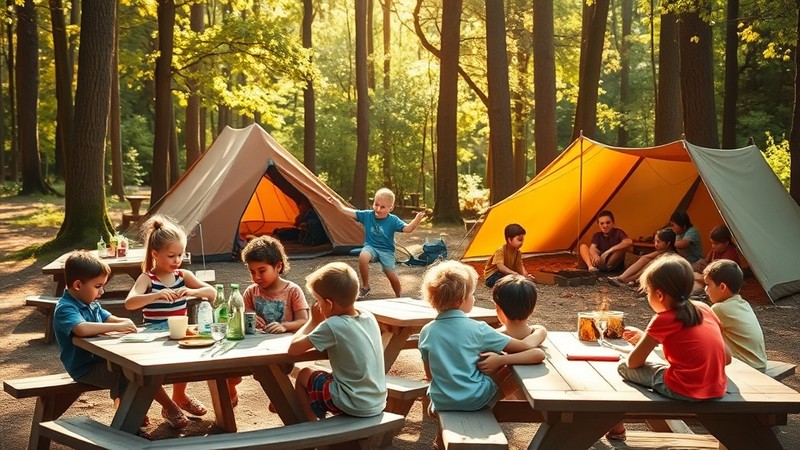
Guest Post: How to Be an Earth-Friendly Summer Camper

Photo by goobiebilly via Flickr (CC)

We’re going camping in a few weeks. When I tell my friends, most of them gasp and recoil in horror. “You are going camping? You? Oh, ha ha, I get it, you’re going ‘camping’. As in … no, I don’t get it. What are you really doing?”

But seriously. I really am, with my husband and three-year-old (we’re leaving our tiara-toting two-year-old with Nana and Papa this year), as well as one of my best friends and her family.

My job for this camping trip, other than not packing too much and staying out of the way and not shrieking over bugs and other wildlife, is to take care of making this outing as eco-friendly as possible. (Part of me suspects they’re just giving me busywork, but won’t they be surprised when I start laying down the law, huh?) Here’s our eco-friendly camping plan:

Waste: Everything’s going in reusable containers, so we don’t have endless, meat-juice laced packaging to throw out each night. We’ll clean and store the containers to reuse again in a sealed container. We’re not going to burn our trash, since this pollutes the air. We have biodegradable bags that we’re going to raise up into the trees at night, which is apparently a good tip for keeping bears at bay. Bears. Heaven help me. (Cue shriek.)

Fires: We’re going to bring our own wood rather than using wood and sticks that we find on the ground—apparently this can mess with the ecosystem. And we’re never going to cut branches from live trees. (Also, obviously, we’re never going to leave our fire unattended or neglect to put it out properly at night.)

Washing Up: I’m bringing my arsenal of biodegradable, natural, sulfate- and preservative-free personal care products, and will share them with everyone. The most important one: Burt’s Bees All-in-One Wash, which we’ll use for almost everything. Also, and this might be the toughest sell, but I’m going to try: we’re not going to spit our toothpaste into the ground. Each person gets a jar, and they have to spit into that. At the end of the camping trip, what they do with their jar is their business. I’m also bringing the most gentle dish soap I can find, and we’ll wash with water only when possible. We’re getting back to basics, after all.

Eco-system Respect: We’ll ascribe to this rule: leave only (very small and gentle) footprints, take only memories. We’re not going to feed the wildlife, but will simply observe them (while trying not to shriek too much). We won’t leave any trash behind, and we won’t cause any damage to the landscape we’re lucky enough to inhabit for a few days. We’ll be communing with mother earth, not damaging her.

Is it wrong that I still wish I could be communing with the Hilton instead? Wish me luck!

Marissa Stapley of Saving the World in Sensible Shoes

  • comment on this postComment
  • RSS Feed IconGet The RSS

Guest Post: Yes, Sensible World-Saving Shoes Can Be Cute, Too

The coveted TOMS Yellow Calypso Canvas Wedge!

It’s no secret that I don’t own any sensible shoes. I actually thought I did at one point, but at a playdate last week, my friend giggled at my little red wedge-heeled sandals and said, “Those aren’t sensible. These are sensible.” Then she stuck out her foot and showed me her hiking boots, which were tucked over her super cool army pants. A few minutes later, her son lost his boomerang on the roof of a nearby pavilion, and she basically scaled the thing to get it down. (It looked pretty awesome with the army pants and all, like we were suddenly in a spy movie.)

Had it been my child’s boomerang, it would still be on that roof. Does that mean I’m going to wear hiking boots to the park next time? Probably not. Unless they start making them in a stiletto. (Do they?) But the truth is, there’s more to a sensible shoe than just style. Truly great shoes are shoes that look good and feel good, in more ways than one. Here are my favourites:

El Natura Lista

The pair of El Natura Listas I own are the aforementioned red wedge heels. (I got them at Trove in Toronto.) They’re (reasonably) comfortable and (exceptionally) cute, and they’re constructed by a company that ascribes to some pretty strict codes of both eco and social responsibility.

TOMS

The TOMS slogan is “One for One”, and what that means is that for every pair of sustainably constructed shoes you buy from them, they will purchase one pair of shoes for a child in need. Talk about win-win! I’m coveting a pair of the Calypso Canvas Wedges in yellow. And although I abhor flats, I’m not sure I’ll be able to resist a pair of the Vegan Wrap Boots (in red, natch) for much longer. Tiny TOMS shoes for kids are also available.

Simple Shoes

They make shoes for the whole family, starting at infants. (And they also make bags. Just saying. I’m a sucker for a cute bag, and the Nordic Knit is calling out to me. What it’s saying is, “You need a weekend purse!” I wholeheartedly agree.) Simple Shoes is committed to making products that are completely sustainable, and they rate their shoe’s eco-friendliness on a “Green Toe” rating system of “good, better, and best”. It’s completely transparent, and you always know what you’re getting. I’m in the market for a new pair of running shoes, and the Carousel Grommets (they come in suede or leopard print) have a bow instead of laces. Sign me up!

Marissa Stapley of Saving the World in Sensible Shoes

  • comment on this postComment
  • RSS Feed IconGet The RSS

Guest Post: Helping My Kids Heed the Ways of the Great Suzuke

David Suzuki by environmentnorth via Flickr (CC)

Remember those David Suzuki “You Have the Power” campaign ads featuring a group of kids sitting around in a circle complaining to the Great Suzuke himself (that’s what I call him; he’s kind of my idol) about their folks’ non eco-friendly ways? (Something along the lines of, Child: “David, my parents don’t even use fluorescent lights.” Suzuke: Gasp.)

Anyway, I’m pretty sure I’m raising kids who are going to be exactly like the kids in that commercial. (Ooh, maybe one day I’ll open the tree house door and the Great Suzuke will be sitting there, chatting!)  Either way, it’s fine with me. They can lecture me all they want if I ever fall off the eco-friendly wagon, and even if I don’t.  (As long as they don’t tell me I’m not allowed to buy any more shoes.) Frankly, I’m just happy my three-year-old son is actually listening to me. He conscientiously turns off lights and tells anyone who will listen he doesn’t want to “waste energy”. Also, we have a time limit on sprinkler use and other water-related activities because (picture this said in the most sanctimonious three-year-old way possible) “Water is precious.” Once a week, we even don our special Garbage Gloves and pick up plastic debris we find on our street, and recycle it. It’s turned into the Best Game Ever as far as my little ones are concerned. Who needs toys and games when your mom lets you touch gross garbage while wearing special gear? One day, I’ll tell them about the floating piles of plastic debris in both the Atlantic and Pacific Oceans, but I’ll probably wait ‘til they’re older so as not to give them nightmares.

Today, environmental education has become a part of almost every curriculum, and I find this thrilling. My hope is that to the next generation, environmental stewardship will be second nature, and conservation a constant quest. But I don’t feel ready to pass the torch to my kids just yet (partly because they’re two and three respectively, and likely not quite prepared to save the world on their own.). I think as parents it’s important for us to set a good example— es, children do learn a great deal at school, but they learn the most important life lessons from the people they look up to most: their parents. (Yes, they do look up to you. Even when they’re talking back.) So it actually does matter if you make the switch to incandescent lights and explain why, or start shopping in bulk when possible to reduce unnecessary packaging and talk about it, or have discussions about endangered species and why preserving their existence is important. We’re handing a world down to our babies, and frankly, we’ve left it in pretty sorry shape. I think we should show our children how committed we are to turning things around for their future by teaching environmental education at home, too.

Long live the Great Suzuke!

—Marissa Stapley of Saving the World (In Sensible Shoes)

  • comment on this postComment
  • RSS Feed IconGet The RSS

advertisement
Twitter Feed

follow us on Twitter

Check out the Summer 2010 issue of Canadian Family: Have a Great Canadian Summer

advertisement Hersy S'mores Vote Ontario Place Save $30 coupon Oral B Stages contest and activities. Luxe for Less
advertisement
Special Messages
advertisement